What Transparency in Coverage Means For You
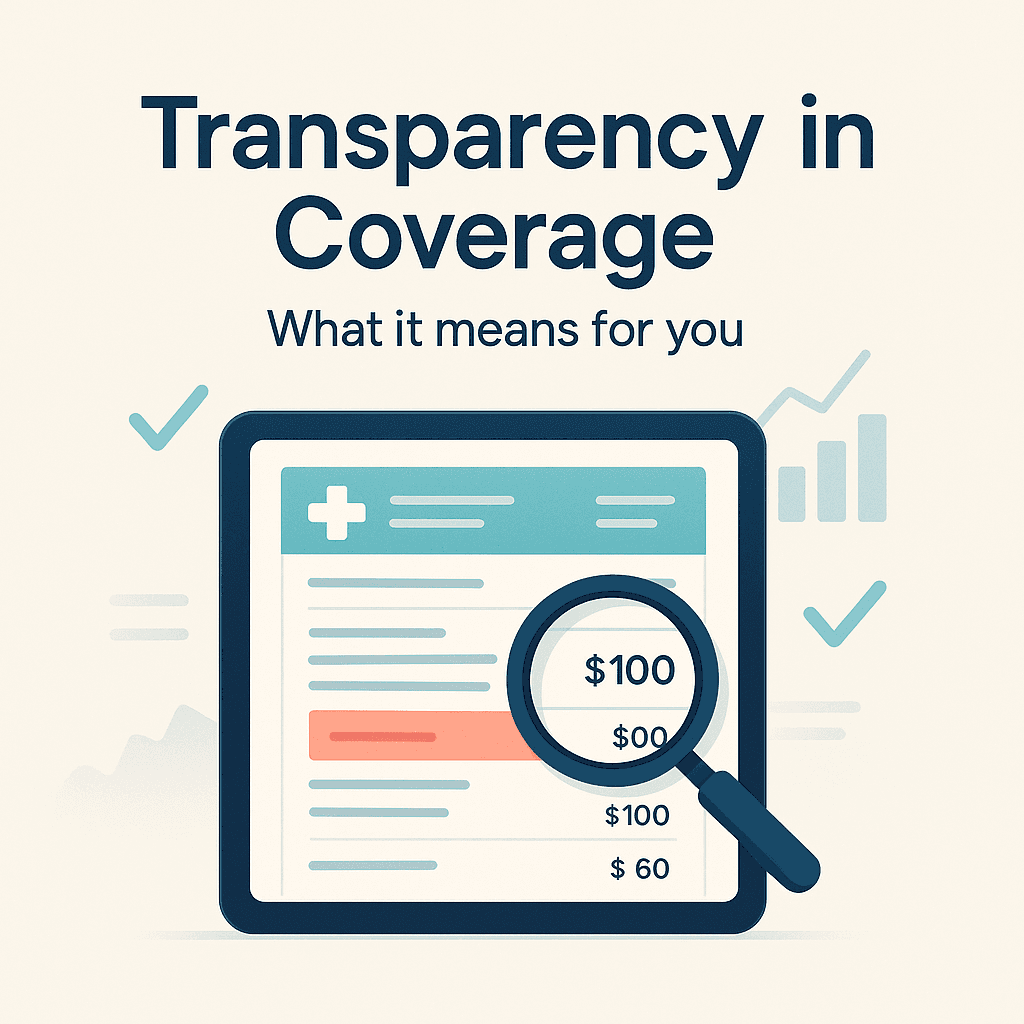
Most people bump into TiC when they’re trying to figure out why a bill looks insane. Or why the same MRI costs $450 at one place and $3,200 at another. Or why their practice is getting paid wildly different rates by the same payer, depending on the code and the contract.
TiC is one of those things that sounds like a policy headline. But it quietly turned into a massive dataset that can change how patients shop for care… and how providers negotiate contracts. This dataset is part of a broader trend towards healthcare cost transparency, which aims to empower patients with information about healthcare pricing.
And yes, it’s messy. The data is huge. The formats are weird. But it’s real leverage if you know what you’re looking at.
Let’s break it down like a normal person would.

So what is Transparency in Coverage, in plain English?
Transparency in Coverage (TiC) is a federal rule that requires most health insurers to publish the prices they’ve negotiated with providers.
Not “chargemaster” prices. Not vague averages. Real contracted rates.
They publish this in big machine readable files, usually updated monthly, and it includes things like:
- Negotiated rates for specific services and codes
- Provider and facility identifiers
- Plan and network information
- Sometimes a lot of extra details you didn’t ask for
It’s basically insurers being told: you can’t keep all pricing hidden anymore. Put it out there.
The catch is: They did put it out there. But they put it out there in a format that is not exactly friendly to humans.
It’s like someone dumped the world’s largest spreadsheet onto the sidewalk and said, good luck.
However, understanding this data could significantly impact your healthcare decisions and financial outcomes. Studies have shown that access to such detailed pricing information can lead to more informed choices by patients, resulting in better health outcomes.

Why does TiC exist in the first place?
The whole point was to help people understand healthcare prices before they get care.
Because historically the flow has been:
- Get care
- Wait
- Get bill
- Argue with insurance
- Still pay something you didn’t expect
TiC was supposed to push the system closer to, you know, normal shopping behavior. See price. Compare options. Decide.
Now, in reality, patients don’t always have the time, energy, or clinical context to price shop. And in emergencies, it’s not even a thing.
But TiC still matters because it forces price data into the open. And once it’s open, other players can use it.
Patients, employers, analysts, and yes. Providers.
What TiC means for patients
Let’s start with the consumer angle because that’s the headline reason TiC exists.
1. You can see real negotiated prices (in theory)
TiC includes negotiated rates. That’s the amount an insurer agrees to pay a provider for a service.
So if you’re trying to get a cash estimate, or you want to understand whether a quote is in the right ballpark, this is a new source of truth.
But. The word “machine readable” matters. You’re not going to casually open these files and browse like Yelp. Most people can’t.
So in practice, TiC helps patients when the data gets translated into tools, calculators, search experiences, or employer benefits platforms.
2. Price variation becomes obvious
If you’ve ever suspected healthcare pricing is random, TiC is basically confirmation.
Same CPT code. Same metro area. Same payer. Rates can still vary a lot.
Sometimes it’s justified. Teaching hospitals. Complex cases. Unique capabilities.
Sometimes it’s just contracting power.
Seeing the spread can help patients ask better questions like:
- Why is this so expensive here?
- Is there an in-network alternative?
- Can I get a pre-service estimate?
- Is there a facility fee being added?
3. It strengthens the case for better tools
TiC is raw fuel. Not the finished product.
The more people demand usable price transparency, the more pressure there is on the market to build better experiences around it.
So patients benefit indirectly too. Even if they never open a TiC file.
What TiC means for providers (this is where it gets interesting)
If you’re a medical practice, TiC is not just a consumer transparency thing.
It’s part of rate intelligence.
And for a long time, rate intelligence was locked up behind closed doors. You could guess. You could ask consultants. You could rely on old surveys or “percent of Medicare” heuristics.
But you didn’t have broad visibility into what payers were actually paying across your market.
TiC changes that.
1. You can benchmark your contracted rates against the market
This is the big one.
A practice can compare its negotiated rates to:
- Other providers in the same geography
- Similar specialties
- Same payer, different networks
- Same codes, different sites of service
And once you see that, you stop negotiating from a place of vibes.
You negotiate from data.
If your 99213 is paid at $X and the local benchmark is $X plus 25 percent, you’re not being “greedy” by asking for more. You’re identifying underpayment relative to what the payer is already paying others. That’s rate intelligence.
2. You can find underpaid codes you forgot to look at
Most renegotiations focus on a few high volume codes. E/M, common procedures, imaging, therapy visits.
But underpayment often hides in the long tail. The codes you bill weekly, not hourly.
TiC based analysis can surface:
- Codes where your rate is meaningfully below benchmark
- Payers where your fee schedule is stale
- CPTs where peers got meaningful increases
- Odd anomalies that scream “contract error”
Sometimes that leads to renegotiation. Sometimes it leads to a claims audit or a contract compliance review. Either way, it’s money you weren’t seeing.
3. You can negotiate with specifics, not generalities
Here’s the difference between a weak negotiation and a strong one.
Weak: “We need a rate increase. Costs are up.”
Stronger: “For these 35 codes, our contracted rates are in the 20th percentile of your negotiated rates in this county for the same specialty and practice size. We are requesting adjustment to at least the median, effective on X date.”
That’s a different conversation. It signals you did your homework.
And payers respond differently when they know you’re bringing data to the table.
4. You can prep for payer meetings faster
If you’ve ever done contract work, you know the pain.
You pull reports. Clean them. Argue about what “allowed amount” means. Export spreadsheets. Build a deck. Realize you missed a code family. Start again.
TiC data doesn’t solve everything by itself, but when it’s processed correctly, it can compress the time it takes to build a negotiation strategy.
That matters for independent practices. They don’t have a contracting department. They have people wearing five hats already.
The biggest misconception: “TiC data is public, so it’s easy”
It’s public. Yes.
Easy. Not even close.
Here’s why.
The files are enormous
Insurers publish multiple machine readable files. Often split by:
- In network rates
- Allowed amounts for out of network
- Prescription drug pricing (separate rule, separate headaches)
These can be gigabytes each. And they refresh monthly. Multiply that by multiple payers and plans and you start to see the scale.
The structure is complicated
You’ll see references to:
- NPIs
- TINs
- Billing code types and modifiers
- Place of service nuances
- Bundled rate arrangements
- Fee schedules vs case rates vs percent of charges style contracts
If you’re not careful, you can benchmark the wrong thing. Or compare apples to oranges and not realize it.
“Negotiated rate” doesn’t always mean what you think
Some contracts have:
- Multiple rates per code depending on site of service
- Different rates per product line
- Different rates per network tier
- Alternative payment models that don’t show cleanly
The dataset is powerful. But it’s not plug and play.
Which is why tools that turn TiC into usable benchmarking are becoming a whole category.
Where Reveon Health fits into this
Reveon Health is basically taking this raw TiC universe and making it usable for the people who actually need it. Providers, revenue cycle leaders, practice admins, contract consultants.
Instead of digging through payer files, you get clear reimbursement benchmark reports derived from TiC data. So you can quickly answer questions like:
- Are we underpaid for our top 50 codes?
- How do our commercial rates compare to local benchmarks?
- Which payer is the biggest outlier?
- Where should we push first in renegotiation?
That’s the core promise. Turning “public but unusable” into “actionable.”
If you want to see what that looks like in your market, you can sign up for a free demo video, request a sample report, or contact us with questions.
Not a dramatic pitch. It’s just. If you’ve ever tried to do this manually, you already know why the tooling matters.

What you can do with TiC data, practically (even if you are small)
Let’s make this real. “Transparency” is nice, but it doesn’t pay payroll.
Here are some practical ways TiC can show up in the day to day for providers.
Use case 1: Contract renewal prep
Your contract is up in 90 days. The payer offers a 2 percent increase. Standard. It’s always 2 percent.
With TiC benchmarking, you can walk in with:
- A code level view of where you sit vs local benchmarks
- A targeted ask, not a blanket ask
- A short list of “must move” codes tied to your volume
You don’t need to boil the ocean. You need 10 to 30 codes that matter.
Use case 2: Discover a silent underpayment problem
Sometimes you don’t need a new contract. You need the payer to follow the one you already have.
TiC analytics can reveal rate patterns that don’t match expectations, like:
- Rates that are far below what peers get for the same payer and code
- Rates that never updated after an amendment
- Weird drops for certain modifiers
Then you can decide: is this a negotiation issue, or a compliance issue?
Use case 3: Multi location groups that suspect rate inconsistency
Groups with multiple sites sometimes get inconsistent reimbursement even under one payer relationship.
TiC based benchmarking can help you spot:
- Location based rate differences
- Site of service impacts that weren’t obvious
- Contract splits that happened over time and nobody remembers why
Use case 4: Consultants and RCM teams scaling their work
If you’re a contract negotiation consultant, or you’re inside an RCM organization supporting multiple practices, TiC data is a scale lever.
Instead of relying purely on client provided EOB samples and anecdotal “this seems low,” you can build market grounded strategies faster.
That’s part of the reason Reveon Health is positioning itself not just for one practice at a time, but also for larger RCM and PMS ecosystems.
A quick reality check, what TiC does NOT solve
TiC is powerful, but let’s not pretend it fixes everything.
- It doesn’t automatically tell you what you should be paid. It tells you what exists in the market.
- It doesn’t guarantee a payer will agree to your ask.
- It doesn’t replace clean coding, strong documentation, and good denials management.
- It doesn’t always capture complex value based arrangements cleanly.
Still, if you’ve been negotiating blind, TiC is a massive improvement.
It’s like switching from “I feel like my rates are low” to “Here’s the exact distribution of negotiated rates in my county for these codes.”
Hard to unsee that once you have it.
How to think about TiC as leverage (not just data)
If you’re a practice owner or admin, the shift is mostly mental.
Old world: you negotiate based on cost increases, relationships, and payer scripts.
New world: you negotiate with market evidence.
And you don’t need to use TiC for everything. But even a small slice helps.
- Start with your top commercial payer.
- Pick your top billed codes.
- Benchmark.
- Identify gaps.
- Build a focused ask.
That’s it. That’s the play.
If you want help turning the TiC firehose into something you can act on, Reveon Health is literally built around that workflow.
Let’s wrap this up
Transparency in Coverage sounds like a policy term, but it’s really a new kind of visibility.
For patients, it’s the beginning of price clarity. Even if the tools are still catching up.
For providers, it’s rate intelligence that used to be hard to get and easy to argue about. Now it’s sitting there, published by the payers themselves, month after month.
The main challenge is turning those machine readable files into something usable. Something you can base decisions on.
That’s where TiC analytics platforms like Reveon Health come in. Benchmarking, underpayment detection, negotiation prep. The stuff that actually moves revenue.
And if you’re reading this representing a practice and thinking, “I suspect we are underpaid but I can’t prove it,” TiC is how you start proving it.
FAQs (Frequently Asked Questions)
What is Transparency in Coverage (TiC) and how does it impact healthcare pricing?
Transparency in Coverage (TiC) is a federal rule requiring most health insurers to publish the exact prices they’ve negotiated with healthcare providers. Unlike vague averages or chargemaster prices, TiC reveals real contracted rates in large, machine-readable files. This transparency helps patients understand why medical bills vary and empowers them to make more informed decisions about their care costs.
Why was Transparency in Coverage introduced in the healthcare system?
TiC was introduced to help patients understand healthcare prices before receiving care, shifting the traditional opaque billing process towards normal shopping behavior. Historically, patients would get care first and only later see confusing bills. TiC aims to provide price visibility upfront, enabling comparison of options and better financial planning for medical services.
How can patients benefit from Transparency in Coverage data?
Patients can access real negotiated prices for specific services, helping them verify if quotes are reasonable. TiC also highlights significant price variations for the same procedures across providers or locations, prompting important questions about cost differences. Furthermore, as raw data fuels development of user-friendly tools and calculators, patients gain indirect benefits through improved price transparency experiences.
What challenges exist with accessing and using TiC data?
Although insurers publish negotiated rates as required, the data is released in massive machine-readable files that are not user-friendly for casual browsing. Most people cannot interpret these files directly. Therefore, practical benefits arise when this data is translated into accessible tools, search platforms, or employer benefit systems that simplify understanding healthcare costs.
Why haven’t AI tools been able to reliably turn TiC data into local or regional benchmark analytics?
Because TiC data is not just large, it is also highly fragmented, inconsistent, and difficult to normalize across payers and markets. The files are often enormous, but the harder challenge is that meaningful benchmarking requires linking rates to the right combination of code, modifier, place of service, payer product, provider type, and geography. Much of that context is not standardized cleanly across files, so generic AI tools can summarize the data, but they often cannot produce dependable local benchmark analytics without a purpose-built data pipeline. This is why we still need human intelligence in the loop for TiC data analytics solutions.
How does Transparency in Coverage affect healthcare providers and their contract negotiations?
For providers, TiC offers unprecedented rate intelligence by exposing actual payer contract rates across markets. Previously, providers relied on guesses or limited surveys to estimate reimbursement rates. With TiC data openly available, providers can better understand payer pricing strategies and use this information to negotiate more favorable contracts based on real market insights.
Does Transparency in Coverage guarantee that all patients can shop for healthcare services effectively?
While TiC promotes price transparency akin to normal shopping behavior, practical limitations exist. Patients often lack time, clinical knowledge, or face emergencies where price shopping isn’t feasible. However, by making pricing data public, TiC enables other stakeholders—like employers and analysts—to develop tools that assist patients indirectly in making more informed healthcare choices.