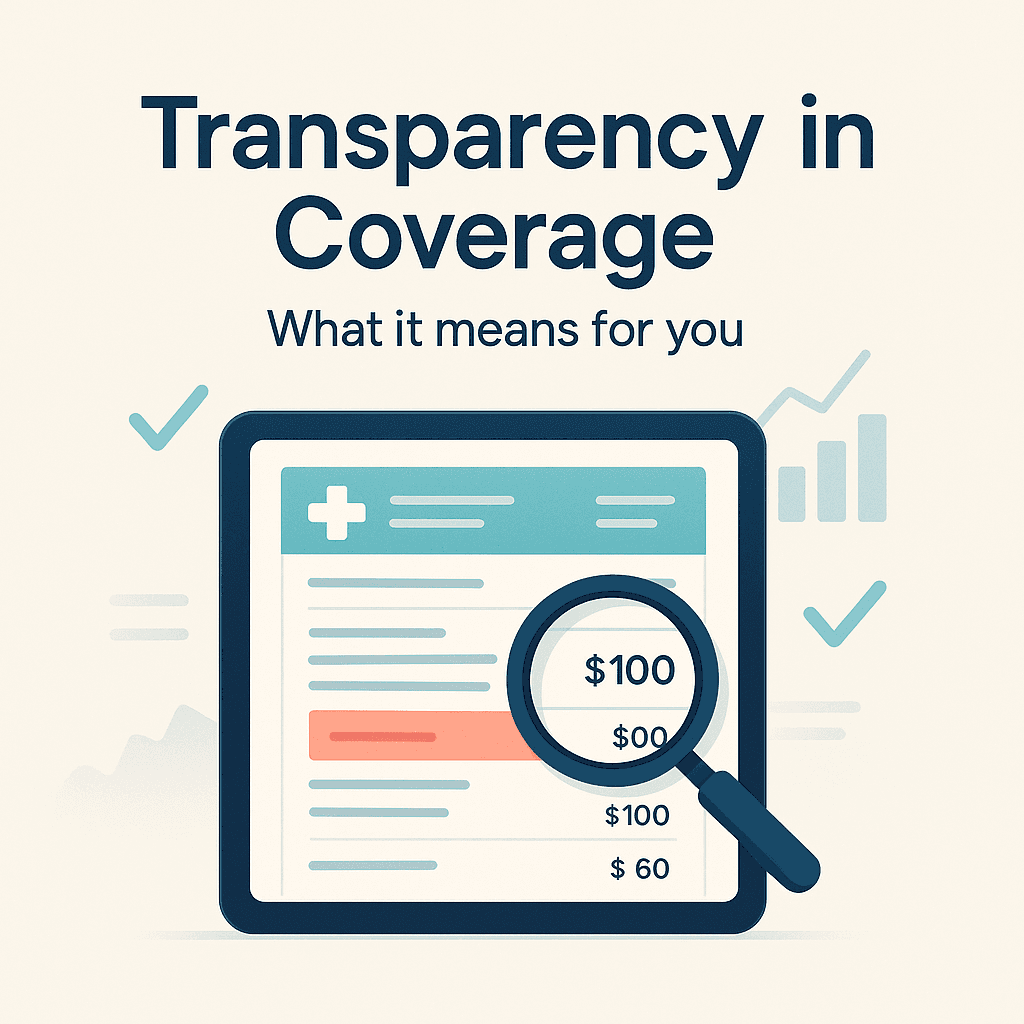
Transparency in Coverage
Federal rules require health plans and insurers to publish detailed rate files. Reveon turns that complex source data into focused competitor comparisons and broader reimbursement benchmarks.

Price Transparency
Turning Published Rates Into Better Decisions
The federal Transparency in Coverage (TiC) rules require most non-grandfathered group health plans and health insurance issuers to publish machine-readable files containing negotiated in-network rates and out-of-network allowed amounts. Enforcement of the core machine-readable-file requirements began July 1, 2022.
These are federally required, insurer-published data files—not a government database and not a ready-made benchmark. They can reveal useful reimbursement information, but only after the files are located, processed, matched to providers and billing codes, and interpreted in the right market context.

Why This Information Is Hard to Use
- Enormous, fragmented files: Insurers publish large JSON files across many plans, networks, and reporting entities.
- Identification challenges: Provider identifiers, network relationships, code combinations, and duplicate or implausible rates can make direct comparisons unreliable without careful filtering.
- Rates need context: A published negotiated rate is a benchmarking input—not a guarantee of claim payment and not, by itself, a negotiation recommendation.
From Raw Payer Files to a Decision-Ready Report
- Raw payer files: Health plans and insurers publish the required machine-readable files on public websites and update them regularly.
- Focused competitor comparison: Reveon's $150 Competitor Rate Snapshot filters the data for one market, up to three named competitors, up to five CPT/HCPCS codes, and up to two payers. It is typically delivered in Excel within three business days after the required information and payment are received.
- Broader benchmark: When the decision requires specialty-wide or geographic context, peer-rate distributions, recommended ranges, or market-entry analysis, move to a Contract Rate Benchmark Report or New Practice Market-Entry Report. The full $150 Snapshot price can be credited toward either full report.
Reveon Health: The Clear Advantage
Reveon turns complex insurer-published files into practical, done-for-you reimbursement intelligence. Practices, RCM teams, and contracting partners can start with the smallest report that answers the immediate question, then expand the analysis only when broader market context is needed.
Who this helps
Independent Practices
Small and independent practices gain local insights into market data of comparable practices and provider network options in their region, helping maintain autonomy.
RCM Teams
RCM teams have new tools to optimize the financial health of the practices they serve, supplementing billing and underpayment efficiency metrics with reimbursement rate intelligence.
Contract Negotiators
Contract negotiators have access to regional and local data to build the most effective negotiation posture on behalf of their clients.
Timeline of TiC
2019: Executive Order 13877 directed federal agencies to develop rules requiring disclosure of healthcare price and negotiated-rate information.
[Federal Register]
October 2020: The Departments of Labor, Health and Human Services, and the Treasury released the final Transparency in Coverage rule.
[CMS]
November 12, 2020: The final rule was published in the Federal Register as 85 FR 72158.
[Final rule]
August 2021: Federal guidance deferred enforcement of the core machine-readable-file requirements until July 1, 2022.
[Federal guidance]
January 1, 2024: The price-comparison-tool requirement expanded to all covered items and services.
[CMS]
July 1, 2022: Enforcement began for public files containing in-network rates and out-of-network allowed amounts and billed charges.
[CMS overview]
December 2025: The Departments proposed updates intended to make the machine-readable files easier to access, compare, and use; those changes remain subject to rulemaking.
[CMS proposal]
January 1, 2023: Health-plan price-comparison tools became required for an initial set of 500 covered items and services.
[CMS]
Current requirement: Plans and issuers generally update their machine-readable files monthly and identify when each file was last updated.
[CMS technical guidance]
